Why a Low Win Rate Can Be the Better System
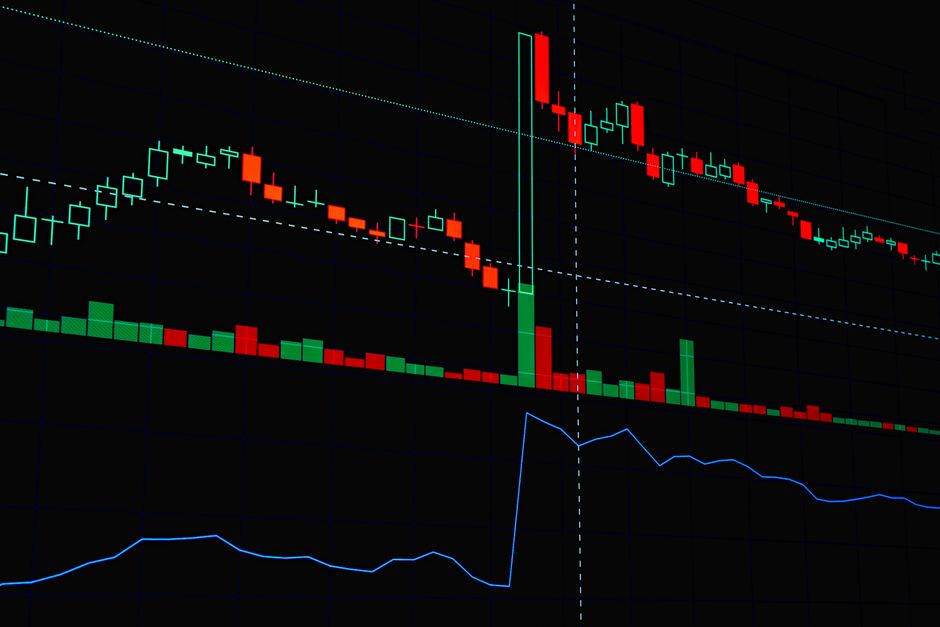
Tell someone a breakout rule loses more often than it wins and the conversation usually ends there. The judgement is instant and made on a number containing no information about what the wins and losses were worth. A count treats every outcome as equal, which is the one thing outcomes never are, and the systems that suffer most from it are often the ones worth keeping.
The Count Discards the Only Thing That Matters

A win rate is produced by sorting every trade into two bins and dividing. The moment that division happens, the difference between a loss that was closed quickly at a tight stop and a loss that ran has vanished, and so has the difference between a win that scraped a small target and one that ran for the rest of the session.
What survives is the frequency. Frequency is a real property of a system and not the one that determines whether the account grows. Two rules can produce the same count and completely different results, because the count was never a description of the money.
Why the Design Produces Frequent Losses

The low win rate is not an accident of a particular rule. It follows directly from a choice about how to handle a position once it is open. Cut the loser quickly and let the winner run, and you have arranged for losses to be frequent and small and wins to be rare and large. The distribution is a consequence of the exit rules, and it was chosen.
An opening range breakout is a natural home for that shape. A break that fails tends to fail promptly, returning inside the range and hitting a stop placed nearby without much drama. A break that works can continue for a long time, because the whole premise of a breakout is that the range was containing something. Frequent quick failures and occasional long successes is the pattern the setup produces when you do not interfere with it.
Raising the Win Rate Usually Costs Something
It is straightforward to make the same rule win more often. Take a nearer target and more trades reach it. Widen the stop and fewer trades are stopped. Both changes lift the count and both take money out of the part of the distribution that was paying for everything.
The nearer target caps the winners, which is where the returns of this kind of system live. The wider stop enlarges the losses, which were small only because they were cut early. The count improves in each case, the person reporting it feels better, and nothing about the market has been read any more accurately. This is the single most common way a working approach gets modified into a poor one.
What a Low Win Rate Demands of You
None of this makes low win rate systems easy to trade. They are considerably harder, and the difficulty is entirely psychological rather than technical.
Long runs of losses are not merely possible, they are expected, and they will arrive in clusters because outcomes do not distribute themselves politely. During those stretches every piece of available evidence says the system is broken, and the only thing contradicting that is the reasoning you did before you started, which by then feels abstract.
This is why such a system needs writing down in advance and reviewing on the whole record rather than the recent part of it. It is also why position size matters more here than in a system that wins often: a losing streak has to be survivable in money and in composure, and the second constraint usually binds first.
Reading the Number Properly
Win rate is not useless. It is a diagnostic, and it is informative when it moves. A rule whose win rate drops sharply while nothing about the exits changed is telling you something about market conditions. A win rate that is stable across a long stretch tells you the rule is doing consistently what it was built to do.
What it cannot do is rank two systems, or tell you on its own whether one is worth trading. For that you need the size of the average win against the size of the average loss, and even then only over enough trades for the rare large outcomes to have appeared. A system built to win occasionally and largely is a system that is misdescribed by any sample too short to contain the large part.
The practical habit is to refuse the question in the form it is usually asked. When someone quotes a win rate, the useful reply is to ask where the target and the stop were sitting, because without those two facts the number cannot be interpreted, and with them it is frequently no longer the point.